Research
Where do "consciousness" and "thoughts" come from?
These fascinating higher-order brain functions emerge as a result of a dynamic "chemical dialogue" among billions of cells—most of which remains invisible nowadays. We develop materials-driven tools by combining synthetic nanomaterials and biological matter to uncover this hidden dialogue.
Our Approach
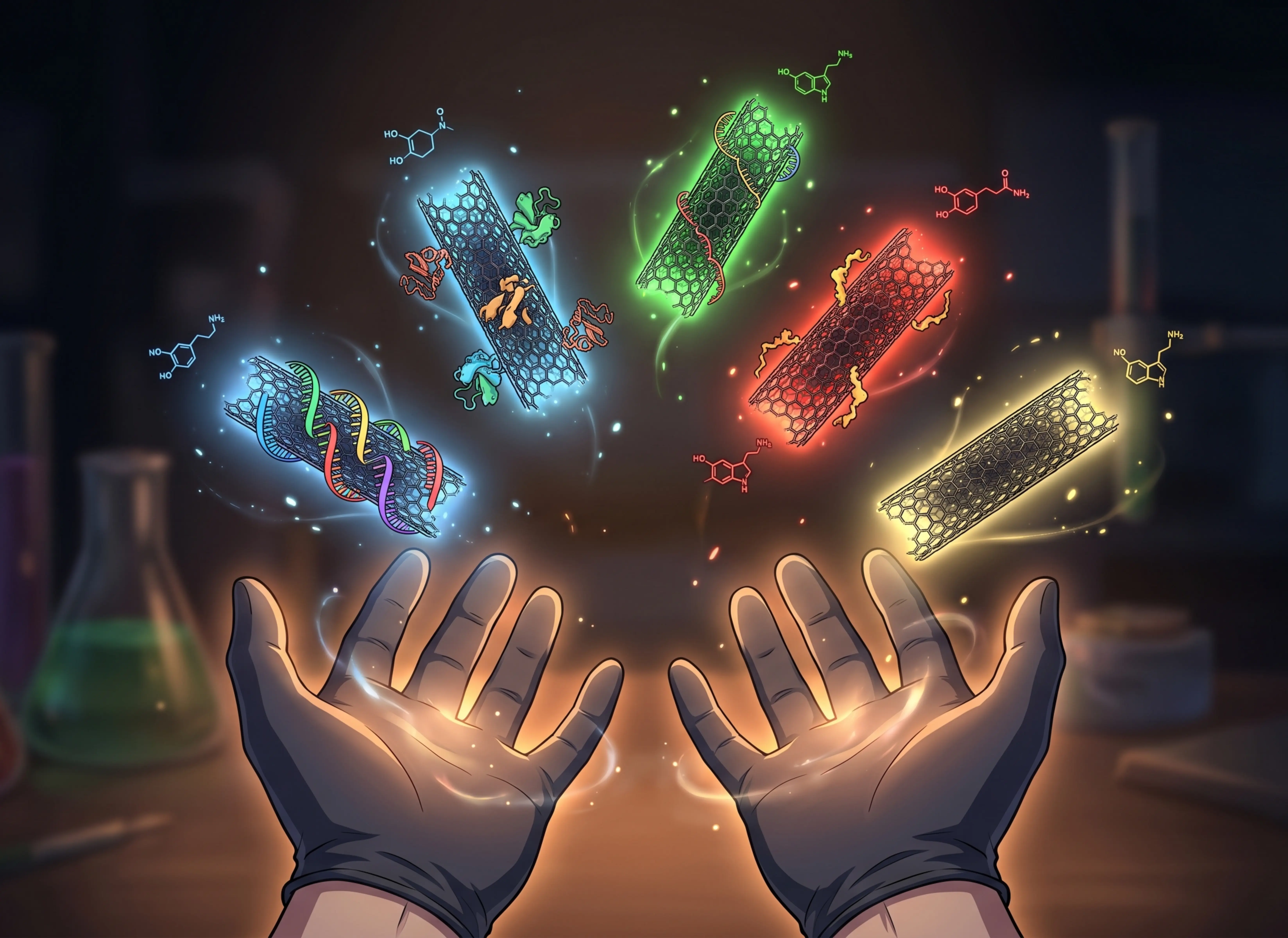
Over billions of years, nature has evolved extraordinarily sophisticated systems. Meanwhile, human has engineered synthetic materials, such as single-walled carbon nanotubes (SWCNTs), that possess rare properties not found in nature.
When these different materials meet, they can trigger fascinating nanoscale phenomena—such as DNA spontaneously wrapping around a SWCNT in a highly ordered structure.
We leverage these unique interactions to engineer functional tools. By doing so, we create novel measurement platforms that expand our perception and illuminate the hidden dynamics of life.
Research Topics
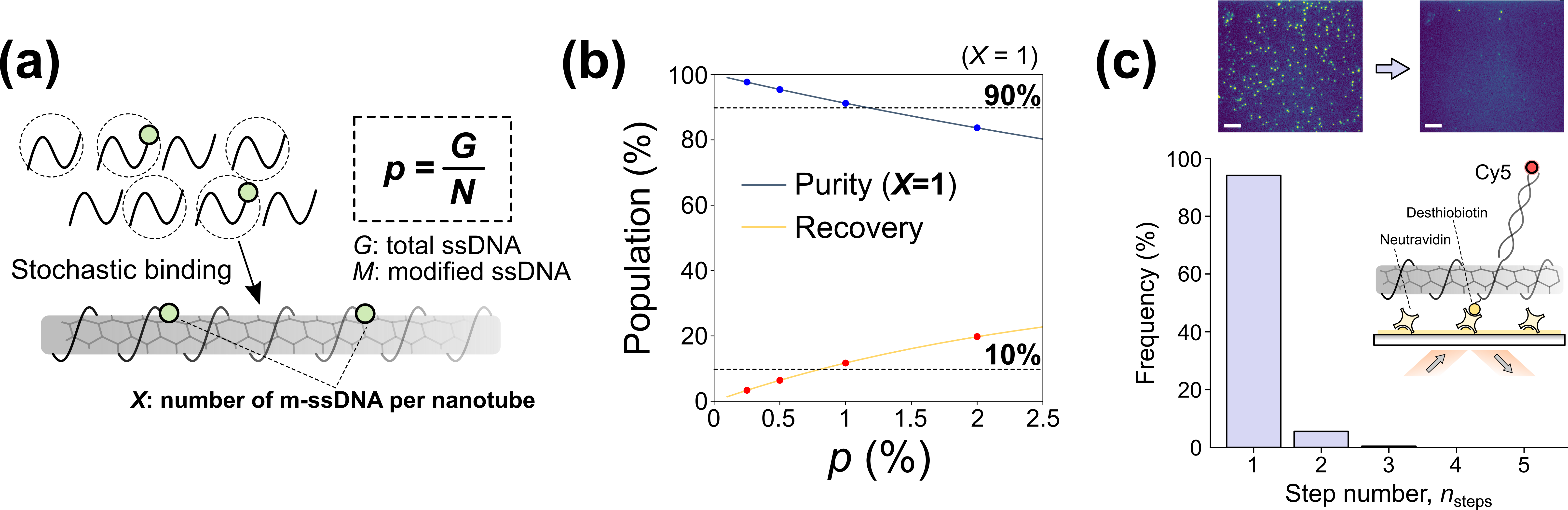
1. Engineering the Corona with Single-Molecule Precision
The performance of nanomaterials is often hindered by structural heterogeneity and thermal fluctuations at their interfaces. We overcome this challenge by leveraging unique, spontaneous interactions at the nano-bio interface to precisely control molecular corona structures at the single-nanoparticle level.
2. De Novo Design of Nanoscale Probes
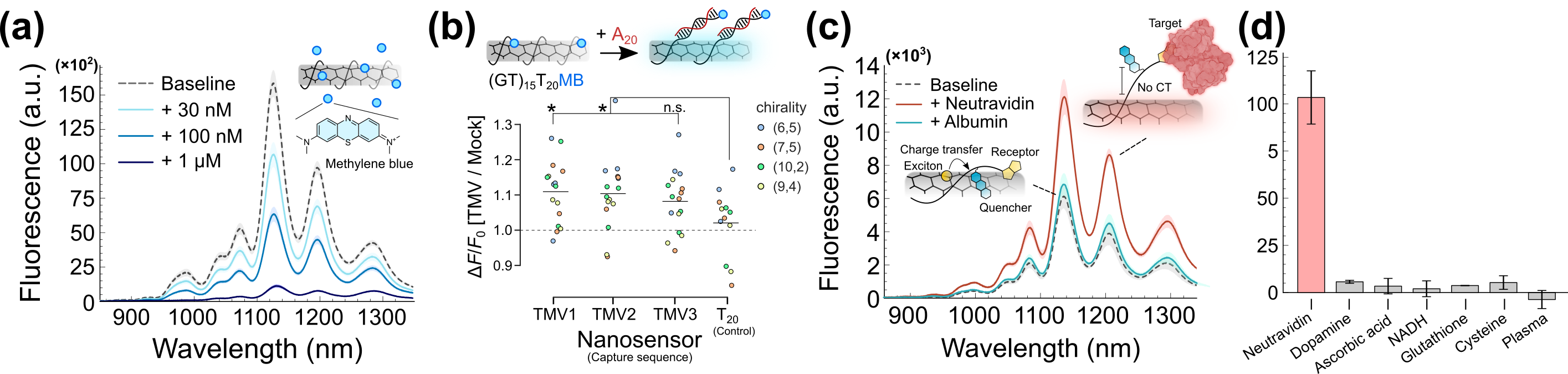
Imagine a nanoparticle that illuminates only when it encounters a specific biomolecule under a specific condition. By understanding i) the biomolecular recognition at the corona phase (signal input) and ii) how these interactions modulate the optical properties of nanomaterials (signal output), we rationally design nanoscale probes with programmable functionality.
- Nishitani et al., PNAS (2025)
- Nishitani et al., Angewandte (2024)
- Ledesma, Nishitani et al., Adv. Func. Mater. (2024)
3. Visualizing Chemical Dialogues in the Brain
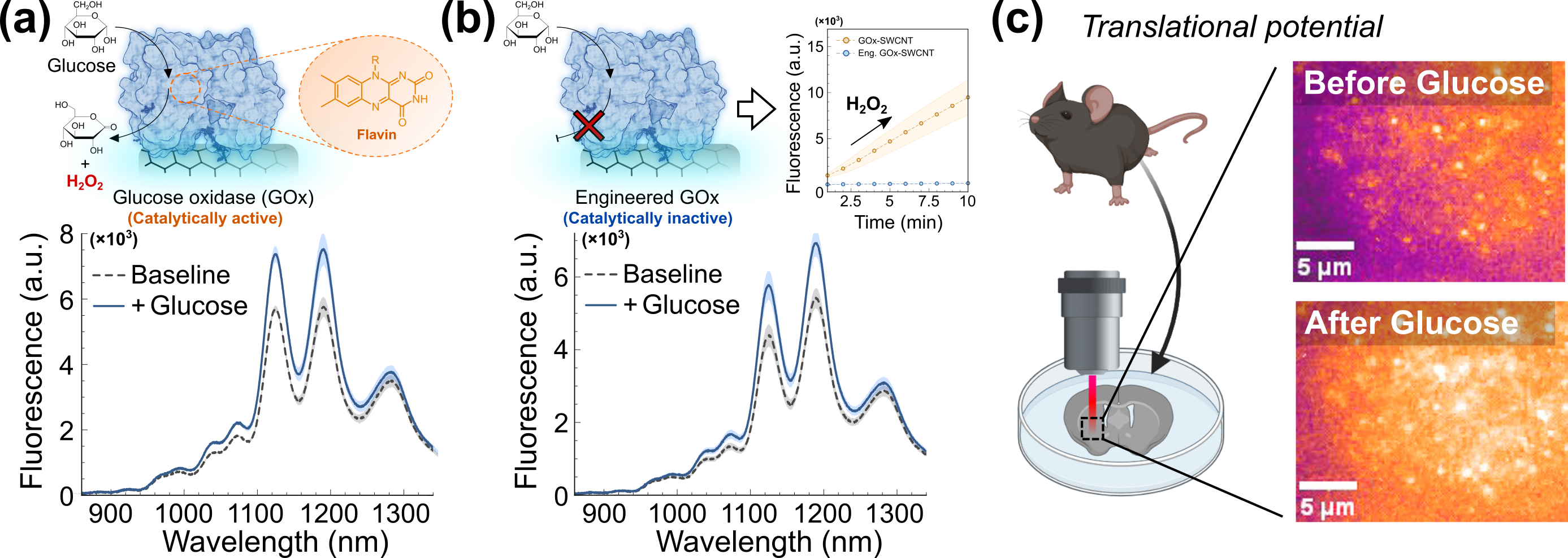
What if we could visualize the entire process of neurochemical signaling—from the precise moment of a molecule's release into the synaptic space to its dynamic diffusion—not just for one, but for multiple molecular species simultaneously? We integrate our functional probes with advanced optical systems to build translational molecular imaging platforms.
- Nishitani et al., Adv. Func. Mater. (2024)
Research Poster
Research Overview
Discover our core research themes, methodologies, and future directions in a single comprehensive poster. Click the button to view or download the high-resolution PDF.